
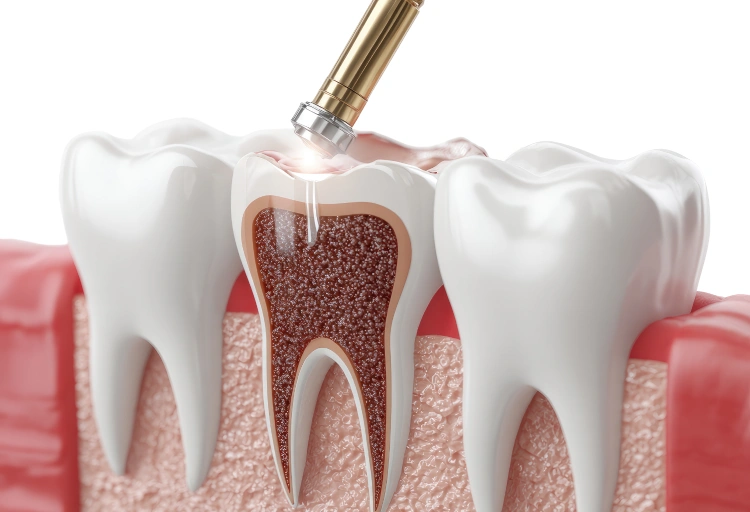
What Is a Root Canal?
Inside every tooth is a soft tissue called the pulp, which contains nerves and blood vessels. When the pulp becomes infected or inflamed, usually from deep decay, a crack, or injury, it can cause significant pain and, left untreated, lead to an abscess or tooth loss.
A root canal treats this by removing the infected pulp, cleaning and disinfecting the inside of the tooth, and sealing it. The tooth stays in place, and once it’s restored, it can continue to function for many years.
Signs You Might Need a Root Canal
Only an examination can confirm whether you need a root canal, but common signs include:
- Persistent or severe toothache, especially when biting or chewing
- Lingering sensitivity to hot or cold, even after the source is removed
- A tooth that has darkened or changed colour
- Swelling or tenderness in the nearby gum
- A pimple-like bump on the gum
- Pain that wakes you at night
Some infected teeth cause little or no pain, which is one reason regular checkups matter. If you’re experiencing any of these symptoms, don’t wait, since early treatment is usually simpler.
Does a Root Canal Hurt?
This is the question we hear most, and the honest answer is that a root canal is done to relieve pain, not cause it. The procedure is performed under local anaesthetic, so it’s usually comparable to having a filling placed.
Much of the discomfort people associate with root canals actually comes from the infection beforehand. Once the infected pulp is removed, that pain is relieved. Some tenderness for a few days afterward is normal, and it’s usually manageable with over-the-counter pain relief.
If dental anxiety is holding you back, let us know. We’ll take the time to keep you comfortable and talk you through each step.
The Root Canal Process
Assessment
We examine the tooth and take X-rays to confirm the diagnosis and understand the shape of the roots. We'll explain what we find and what the treatment involves.
Numbing the Area
We numb the tooth and surrounding area thoroughly so you're comfortable throughout the procedure.
Treating the Tooth
We remove the infected pulp, then clean and disinfect the inside of the tooth and its root canals. This is the part that clears the infection and relieves the pain.
Sealing the Tooth
Once the tooth is clean, we seal it to prevent further infection. Depending on the tooth, treatment may be completed in one or more visits.
Restoring the Tooth
A tooth that has had a root canal often needs a crown to protect it and restore full strength, since it can become more brittle over time. We'll talk through whether a crown is recommended for your tooth.
Why Save a Tooth Instead of Removing It?
When a tooth is badly infected, the two main options are usually a root canal to save it or an extraction to remove it. Where a root canal is possible, saving your natural tooth is generally the preferred option.
Keeping your own tooth helps maintain your natural bite, keeps neighbouring teeth from shifting, and avoids the need to replace the tooth later with an implant or bridge. That said, a root canal isn’t right for every tooth, and we’ll give you an honest assessment of whether it’s the best choice for yours.
Recovery and Aftercare
Most people return to their normal routine the day after a root canal. In the first few days:
- Take any pain relief as directed
- Avoid chewing on the treated tooth until it’s fully restored, especially if it has a temporary filling
- Keep up your normal brushing and flossing
- Contact us if pain or swelling increases rather than settling
Mild tenderness as the area heals is normal. If you were given a temporary filling, it’s important to return for your permanent restoration to protect the tooth long term.
Root Canals and Your Coverage
Root canal treatment is often covered at least in part by dental insurance, and we offer direct billing to most providers. Shaughnessy Square Dental Centre is also a participating provider for the Canadian Dental Care Plan, which covers root canal treatment for eligible patients. We’ll confirm your coverage before treatment so you know what to expect.
Frequently Asked Questions
Does a root canal hurt?
No, not usually. The procedure is done under local anaesthetic to relieve pain, so it’s typically comparable to having a filling. Most of the pain people associate with root canals comes from the infection beforehand, which the treatment resolves.
How long does a root canal take?
It depends on the tooth and how many root canals it has. Treatment may be completed in a single visit or spread across two, and we’ll let you know what to expect for your specific tooth.
Will I need a crown after a root canal?
Often, yes. A treated tooth can become more brittle, so a crown is frequently recommended to protect it and restore full strength, especially for back teeth that handle heavy chewing.
What happens if I don't treat an infected tooth?
An untreated infection can worsen, leading to an abscess, spreading infection, and eventually loss of the tooth. Treating it early is usually simpler and helps you keep your natural tooth.
Is it better to have a root canal or pull the tooth?
Where a root canal is possible, saving your natural tooth is generally preferred, since it keeps your bite intact and avoids replacing the tooth later. We’ll give you an honest assessment of the best option for your situation.
Are root canals covered by insurance?
Root canal treatment is often partially covered, and it’s among the services covered by the CDCP for eligible patients. We offer direct billing and can check your coverage before treatment.
Relief From Tooth Pain in Port Coquitlam
If you have a painful or infected tooth, a root canal may be the gentlest way to save it and end the pain. Request an appointment at Shaughnessy Square Dental Centre, Monday through Saturday.