
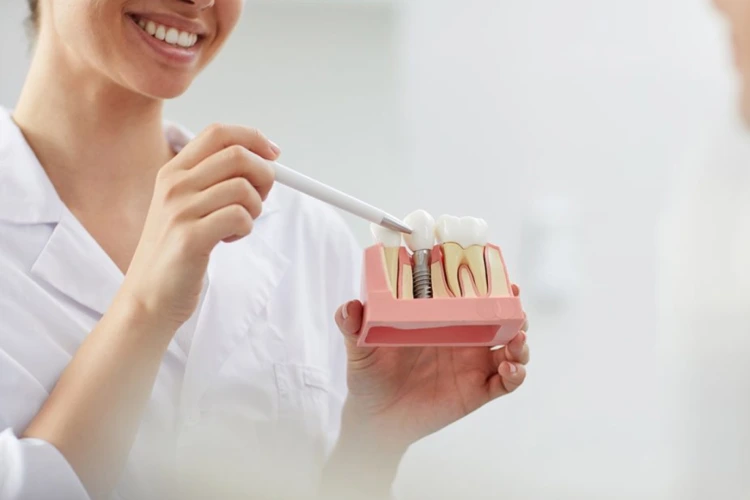
What Is a Dental Implant?
A dental implant is a small titanium post that replaces the root of a missing tooth. It’s placed into the jawbone, where it gradually bonds with the bone over several months in a process called osseointegration. Once healed, a custom crown is attached to the implant, restoring both the appearance and function of the tooth.
An implant has three parts:
- The implant post, which replaces the tooth root and sits within the jawbone
- The abutment, a small connector that joins the post to the restoration
- The crown, the visible part, custom-made to match your surrounding teeth
Are Dental Implants Right for You?
Implants are a good option for many people, though not everyone is a candidate right away. You may be a good fit if you:
- Are missing one tooth, several teeth, or all of your teeth
- Have healthy gums and are free of active gum disease
- Have enough jawbone to support an implant, or are open to bone grafting
- Are committed to good oral hygiene and regular dental visits
- Do not smoke, or are willing to stop during healing
If you’ve been told you don’t have enough bone for implants, that isn’t necessarily the end of the conversation. We offer bone grafting to rebuild the area and create a stable foundation for treatment.
The Dental Implant Process, Step by Step
Your Free Consultation
We start with a thorough exam and imaging to assess your bone, gums, and remaining teeth. We'll discuss your goals, explain your options, and give you a clear treatment plan. This consultation is free, with no obligation.
Preparing the Site
If the tooth is still present, it may need to be removed. Where bone volume is limited, we may recommend a bone graft to build up the area before the implant is placed. Healing time varies depending on what's needed.
Placing the Implant
The implant post is placed into the jawbone during a procedure performed under local anaesthetic. Most patients are surprised by how manageable this appointment is, and we'll give you clear aftercare instructions before you leave.
Healing and Integration
Over the following months, the implant bonds with your jawbone. This healing period is what gives implants their stability. In many cases a temporary restoration can be worn during this time.
Your Final Restoration
Once healing is complete, we attach the abutment and place your custom crown, bridge, or denture. We check the fit and bite carefully so your new tooth feels natural when you eat and speak.
Implant Options We Offer
Single Tooth Implant
Replaces one missing tooth without altering the healthy teeth on either side, which is a key advantage over a traditional bridge.
Multiple Tooth Implants
Two or more implants can support a bridge to replace several teeth in a row, avoiding the need for a removable partial denture.
Implant-Supported Dentures
For patients missing most or all of their teeth, a small number of implants can anchor a full denture. This significantly improves stability compared with a conventional denture, making eating and speaking more comfortable.
Bone Grafting
When there isn’t enough bone to support an implant, a graft rebuilds the area. This makes implant treatment possible for many patients who were previously told they weren’t candidates.
Benefits of Dental Implants
Look and feel natural
Custom restorations are matched to your surrounding teeth
Protect your jawbone
Implants stimulate the bone the way natural roots do, helping to limit the bone loss that follows tooth loss.
Preserve healthy teeth
Unlike a bridge, a single implant doesn't require reshaping the neighbouring teeth.
Eat comfortably
Implants are fixed in place, so there's no slipping or shifting.
Long-lasting with proper care
With good oral hygiene and regular checkups, implants can serve you well for many years.
What to Expect During Recovery
Most patients experience some swelling and tenderness for a few days after implant placement, which is normal and usually manageable with over-the-counter pain relief. We’ll give you specific aftercare instructions, including what to eat and how to keep the area clean while it heals. Full integration with the bone takes several months, and we’ll monitor your progress at follow-up appointments along the way.
The Cost of Dental Implants
The cost of dental implant treatment depends on several factors, including how many teeth are being replaced, whether a bone graft or extraction is needed, and the type of restoration you choose. Because every case is different, we provide a clear, itemized treatment plan at your free consultation, so you know exactly what’s involved before making a decision.
Important to know: The Canadian Dental Care Plan does not cover dental implants. Many private insurance plans offer partial coverage, and we offer direct billing to most providers. Our team will help you understand what your plan includes.
Your Port Coquitlam Implant Dentists
Dental implant treatment at Shaughnessy Square Dental Centre is provided by Dr. Fadi Ibrahim and Dr. Soha Changezi. Dr. Ibrahim is a general dentist with a particular focus on implant dentistry and root canal treatment, and has completed extensive continuing education in the field across Canada and the United States. Because we place and restore implants in our own clinic, your care stays with a team that knows your history.
Frequently Asked Questions
How long do dental implants last?
With good oral hygiene and regular dental visits, implants can last many years. The implant post itself is designed to be a long-term solution, though the crown
Does getting a dental implant hurt?
Implant placement is performed under local anaesthetic, so you shouldn’t feel pain during the procedure. Some tenderness and swelling afterward is normal and usually manageable with over-the-counter pain relief.
How long does the whole process take?
Most implant treatments take several months from placement to final restoration, because the implant needs time to bond with the jawbone. Your exact timeline depends on whether extractions or bone grafting are needed, and we’ll map it out at your consultation.
Am I too old for dental implants?
There’s no upper age limit for implants. What matters more is your general health, gum health, and bone volume, all of which we assess at your consultation.
Does the Canadian Dental Care Plan cover implants?
No. Dental implants are not covered under the CDCP. Some private insurance plans provide partial coverage, and our team can help you understand your benefits.
What if I don't have enough bone for an implant?
Bone grafting can rebuild the area and create a stable foundation. Many patients who were previously told they weren’t candidates for implants are able to proceed after grafting.
Ready to Explore Dental Implants?
If you’re missing one tooth or several, a conversation is the best place to start. Book a free consultation at Shaughnessy Square Dental Centre and we’ll walk you through your options, with no pressure and no obligation.