
Guided dental implant surgery is a planning and placement approach that uses diagnostic imaging and digital treatment planning to help position a dental implant. A custom surgical guide may be created to help the clinician follow the planned implant position during the procedure.
The goal is to plan implant placement in relation to the available bone, nearby anatomical structures, and the intended replacement tooth. Whether guided surgery is appropriate depends on the individual case and the clinician’s assessment.
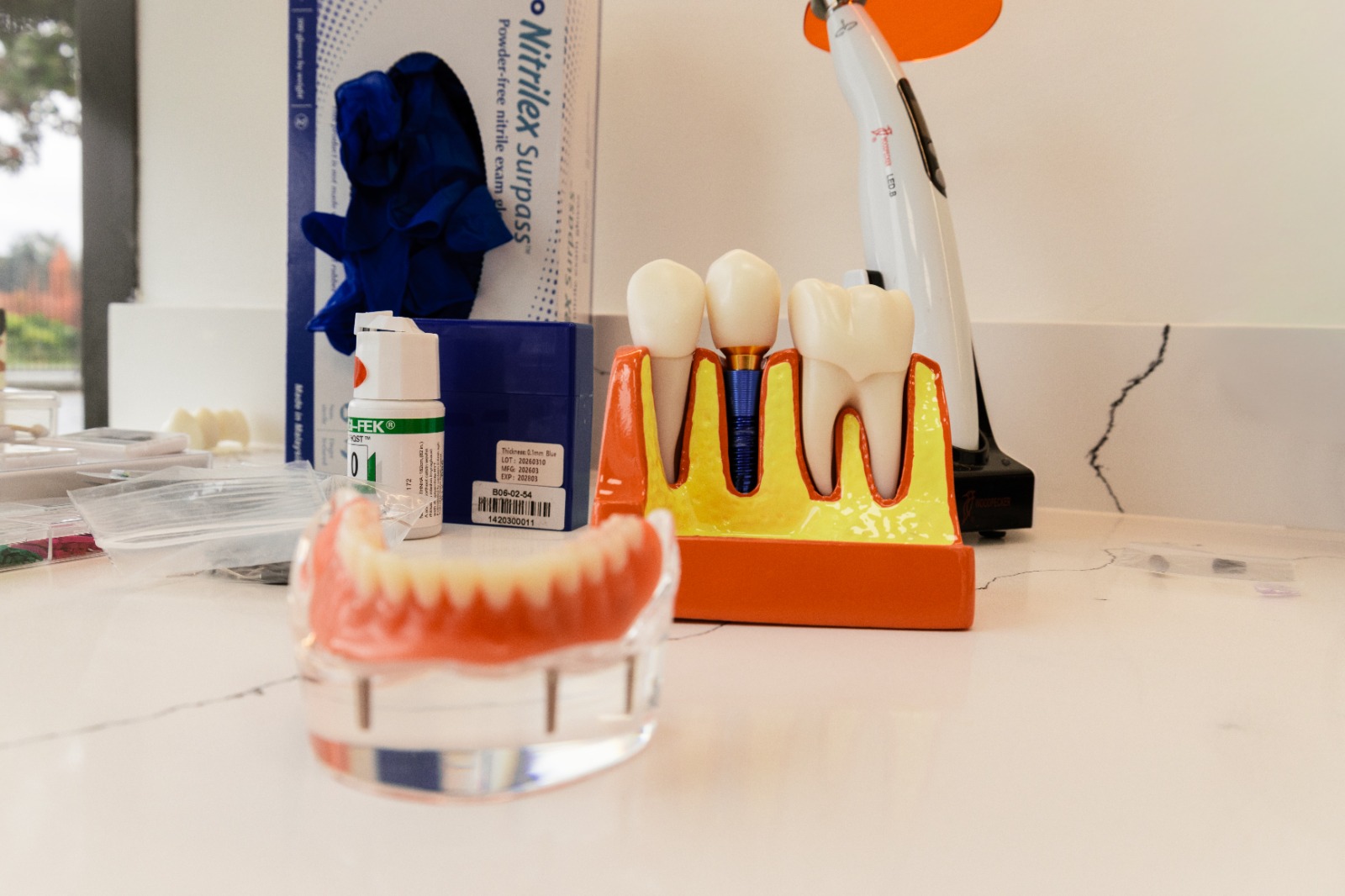
A dental implant must be positioned with the final restoration in mind. The dentist needs to consider the available bone, the shape of the jaw, the location of neighbouring teeth, the bite, and important structures such as nerves and the sinus. Careful planning helps the clinical team assess the proposed implant position before surgery.
The process begins with a review of your dental and medical history, an examination of the mouth, and a discussion of your goals. Your dentist checks the condition of the gums, remaining teeth, and proposed implant site. Any active oral health concerns may need to be addressed before implant treatment.
Imaging is selected according to clinical need. For some implant cases, three-dimensional cone-beam computed tomography (CBCT) may be used to assess bone volume and the relationship of the implant site to nearby structures. Digital scans or other records may also be used to understand the teeth, gums, and planned restoration. Not every patient requires the same imaging.
The clinical team uses the available records to plan the proposed implant position, angle, and depth in relation to the intended restoration and anatomy. This planning stage helps identify considerations that may affect the procedure, such as limited bone volume or the need for additional treatment.
If guided placement is selected, a custom guide may be designed from the planning records. During surgery, the guide fits over the teeth or another planned support and helps direct the instruments according to the approved plan. The guide is a planning aid; the clinician remains responsible for assessing the site and making appropriate decisions during treatment.
The implant is placed according to the treatment plan. The site then needs time to heal and the implant to integrate with the jawbone. The final restoration may be attached after the clinician determines that healing and stability are suitable. The timing and number of appointments vary by patient and treatment complexity.
Guided surgery is not a guarantee of a complication-free procedure or a particular result. The benefits depend on the case, the quality of the records and planning, the guide design, and the clinician’s judgement. Not all implant procedures require a surgical guide.
Guided implant planning may be considered for patients replacing one tooth, several teeth, or a larger number of teeth. Suitability depends on bone volume, gum health, the position of nearby structures, the planned restoration, and overall health. Some patients may need treatment such as periodontal care, extraction, or bone augmentation before implant placement.
No. Guided implant surgery commonly refers to a clinician using a planned surgical guide or navigation system to help direct implant placement. It does not automatically mean a robot performs the procedure.
No. The need for guided placement depends on the anatomy, complexity, treatment plan, and clinician’s judgement.
No. Implant surgery has risks, and a guide does not remove them. Your dentist should explain the risks and how they apply to your case.
Not necessarily. The overall number of appointments depends on the condition of the mouth, any preparatory treatment, healing, and the type of final restoration.
If you are considering dental implants, ask Shaughnessy Square Dental Centre about the assessment and planning process. The team can explain which diagnostic records and treatment options may be appropriate for your individual case.
Related service page:
Dental Implants
Book an appointment:
Book an Appointment
The following reputable sources informed the general patient-education content. The treating dentist should review the article before publication.